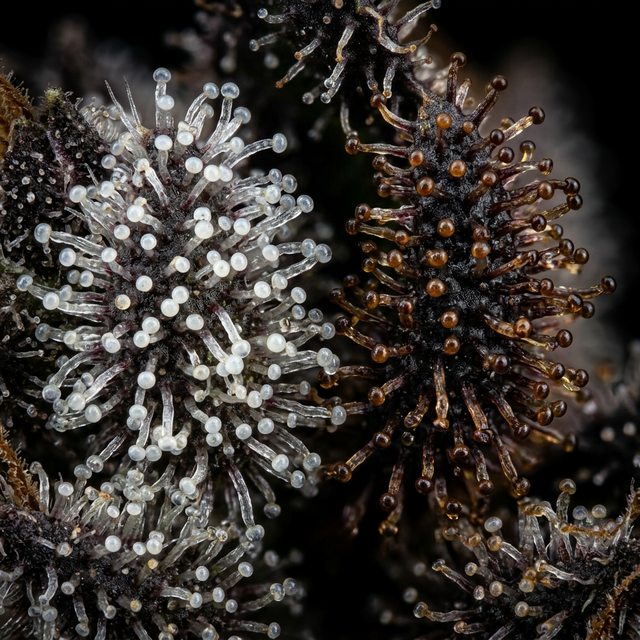
Hash (hashish) is a cannabis concentrate made from compressed trichomes, the resin glands of the cannabis plant. Its color, ranging from blonde to nearly black, reflects trichome maturity at harvest and directly predicts the cannabinoid profile. Lighter hash is typically high in THC and produces a cerebral, energetic effect. Darker hash contains elevated CBN (cannabinol), a THC degradation product, and produces a sedative, body-heavy effect. This distinction has direct clinical relevance when assessing how and why a client is using.
In substance abuse treatment, we often talk with clients about how much they smoke, but less frequently about the specific characteristics of the substance. However, understanding the origin and appearance of hashish can provide important clinical insights.
The secret to hash making all comes down to the trichomes, the tiny, crystal-like resin glands on the cannabis flower. As a cannabis plant matures through the flowering stage, the trichomes change color, acting as a natural indicator of the plant’s chemical profile.
Here is how harvesting at the “milky” stage versus the “dark/amber” stage changes the hash and the client’s experience.
The “Milky” Harvest (Peak Maturity)
When a grower harvests while the trichomes are mostly cloudy or “milky” white, the plant has reached its absolute peak in THC production.
- Color of the Hash: Hash made from milky trichomes is typically lighter in color. It usually takes on a blonde, golden, or light sandy appearance. (Note: The extraction method, like dry sifting vs. ice water extraction, can also affect the final color, but the baseline resin is lighter).
- Chemical Profile: At the milky stage, the resin glands are swollen with maximum levels of THCA (which becomes THC when heated) and peak terpene profiles.
- Potency & Effects: Because THC is at its highest concentration, milky hash delivers a much more cerebral, energetic, and psychoactive high. It is often described as an uplifting “head high” rather than a heavy body stone. Clients using this type typically experience increased alertness and racing thoughts.
The Late Harvest (Dark/Amber Trichomes)
If a grower waits to harvest until late in the flowering stage, the trichomes begin to degrade, turning from milky white to an amber, dark brown, or reddish color.
- Color of the Hash: Hash produced from these late-harvest trichomes will naturally be much darker, resulting in a dark brown to almost black product. (Keep in mind: Hash can also turn dark due to oxidation during the curing and pressing process, but amber trichomes guarantee a dark starting material).
- Chemical Profile: The dark color indicates oxidation. The plant has passed its peak maturity, and the THC inside the trichomes has begun to degrade into CBN (Cannabinol).
- Potency & Effects: While the overall THC percentage will be slightly lower than a milky harvest, the high CBN content drastically changes the effects. Dark hash is famous for being heavily sedative, narcotic, and deeply relaxing. This is what produces the classic “couch-lock” or heavy “body stone” associated with traditional hashish.
Quick Comparison Guide
| Feature | Milky Trichomes (Peak Harvest) | Amber Trichomes (Late Harvest) |
|---|---|---|
| Hash Color | Lighter (Blonde, Golden, Sand) | Darker (Dark Brown, Black) |
| Primary Cannabinoid | Peak THC / THCA | THC mixed with elevated CBN |
| Potency/High Type | Cerebral, energetic, uplifting | Sedative, narcotic, heavy body stone |
| Best Used For | Daytime use, creativity, socializing | Evening use, relaxation, sleep |
Why It Matters to Counselors
When a client discusses their consumption, the appearance of the hash and the nature of the high can give you insights into their underlying needs.
Are they self-medicating for anxiety, racing thoughts, or insomnia (often drawn to dark, CBN-rich hash), or are they seeking an escape characterized by energy and stimulation (often drawn to lighter, THC-rich hash)? For a plain-language overview of how these effects present in the moment, Avenues Recovery’s write-up on the short-term effects of marijuana is a useful patient-facing companion piece.
A Note on Processing: While trichome color is the baseline, how the hash is handled also matters. Pressing hash with heat and pressure bursts the resin glands, oxidizing the oils and turning even blonde hash darker on the outside.
Frequently Asked Questions
What does hash color tell you about potency? Hash color is a reliable proxy for cannabinoid profile. Lighter hash (blonde, golden) is typically produced from peak-maturity trichomes with maximum THCA content, delivering a cerebral, psychoactive effect. Darker hash (dark brown, black) indicates trichome degradation and elevated CBN, which is sedative rather than psychoactive. Color alone doesn’t determine strength, but it predicts the type of effect the client is seeking.
What is CBN and how is it different from THC? CBN (cannabinol) is a byproduct of THC degradation. It forms when THCA oxidizes and breaks down, either through late harvesting or aging. Unlike THC, CBN is not strongly psychoactive. Its primary effect is sedative, producing the “couch-lock” or heavy body stone associated with traditional dark hashish. CBN content increases the longer cannabis is stored or the later in flowering it is harvested.
Does darker hash mean stronger hash? Not necessarily. Darker hash has lower THC content (because THC has degraded to CBN) but may produce effects clients perceive as more intense due to the sedative quality of high-CBN product. It is stronger in the sense of being more incapacitating, but not stronger in the sense of having higher psychoactive THC. The distinction matters clinically: clients seeking sleep or pain relief often prefer dark hash; clients seeking stimulation or creativity prefer lighter product.
What are trichomes and why do they matter for counselors? Trichomes are the small, crystal-like resin glands on the cannabis flower that contain the plant’s cannabinoids and terpenes. They’re the active ingredient. When a client describes their product as “frosty” or “crystalline,” they’re describing high trichome density. Understanding trichomes helps counselors ask better questions about specific effects, and understand whether a client is self-medicating for anxiety, insomnia, or social stimulation.
Can you tell hash quality from appearance alone? Trichome color (and thus hash color) is a useful baseline, but processing matters too. Even blonde, high-quality hash turns darker when pressed with heat, as oxidation affects the surface color. Black hash can result from either late-harvest trichomes or aggressive processing of otherwise high-quality material. The color informs the conversation but shouldn’t replace it.
This article was written by SmokingTracker to help cannabis treatment professionals understand the substances their clients use.
In SmokingTracker, clients don’t just log that they smoke, but also the specific consumption methods, and over time, precise tracking of timing and urge patterns can help you open a deeper conversation about the substance’s function.