Cannabis Use Disorder Documentation

One click. A complete clinical report. Session-ready.

SmokingTracker generates structured PDF reports from your client's objective EMA data — trend charts, session annotations, and trigger analysis formatted for EHR entry, supervision, or referral. No copy-pasting. No manual charts.

What's in the report

Six structured sections. All data — zero formatting work.

📅

Session Calendar

Visual heatmap of logged sessions across the report period — frequency, pattern, and gaps visible at a glance.

📈

Use Trend Chart

Week-by-week frequency and consumption volume plotted as a line chart — ideal for tracking reduction progress.

🧠

Mood & Craving Scores

Mood rating and craving intensity plotted alongside use events — shows the emotional-use relationship over time.

🎯

Top Triggers

Ranked breakdown of the client's logged triggers — stress, social context, boredom, habit, pain — with session count per category.

🏷️

Method & Substance

Pie breakdown by administration method (flower, vape, edible, concentrate) and substance type with percentage split.

📝

Clinical Notes

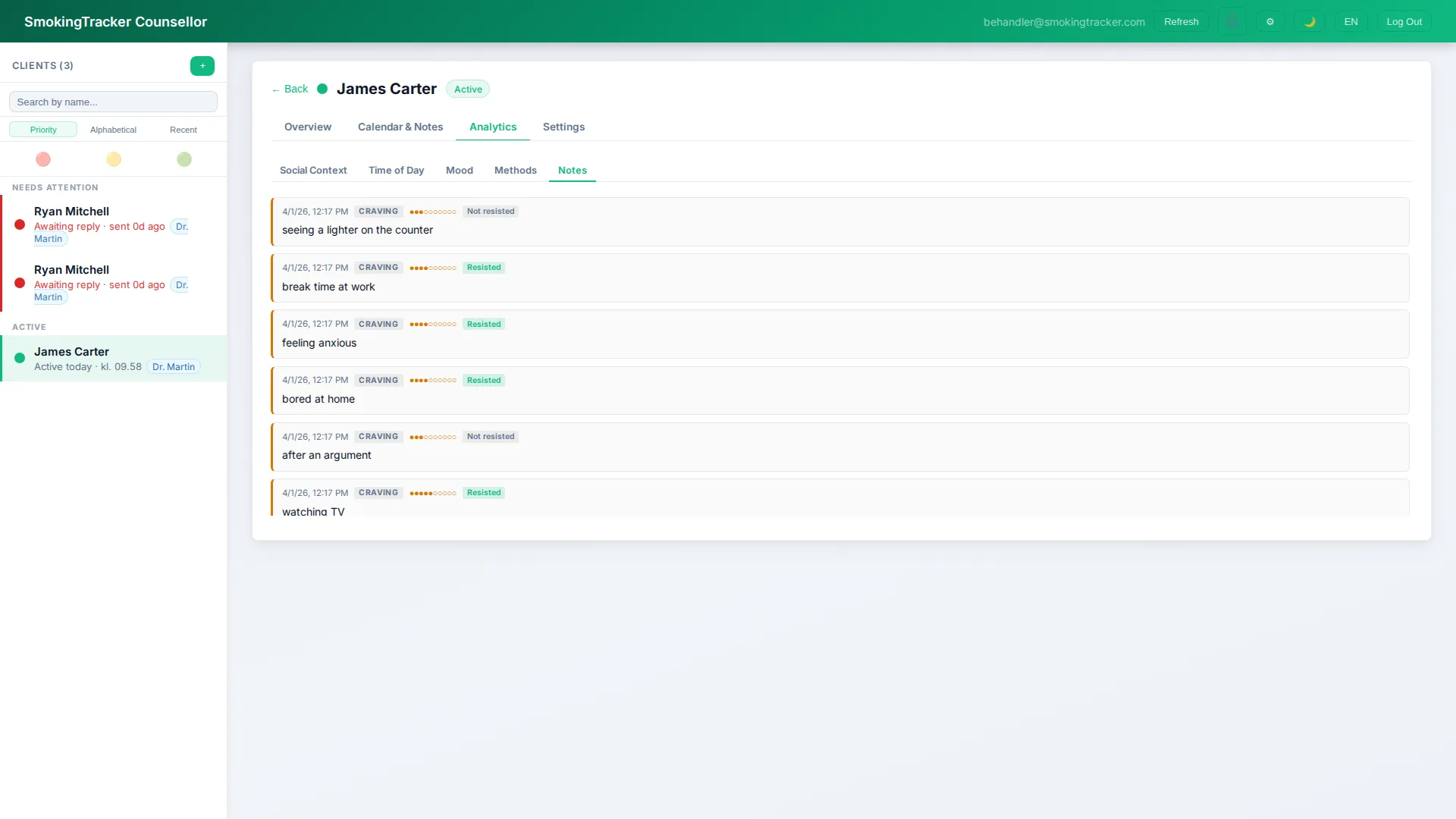
Your session annotations and flagged events appear in chronological context alongside the objective data.

EHR & referral documentation

Documentation that holds up to clinical scrutiny

Generated reports include the data source, collection method (EMA), and time period — making them transparent and reproducible for EHR submission, supervisory review, insurance documentation, or cross-disciplinary referrals. No narrative invented from memory.

  • PDF export with clinician name, client ID, and date range
  • Data sourced from timestamped EMA entries — not recall
  • Custom date range — weekly, monthly, or full programme span
  • Printable and digitally shareable format
See the data before it becomes a report →
Clinical report export interface showing session notes and trend data
Supervision & billing

Demonstrate clinical progress in formats your supervisors and payers recognise

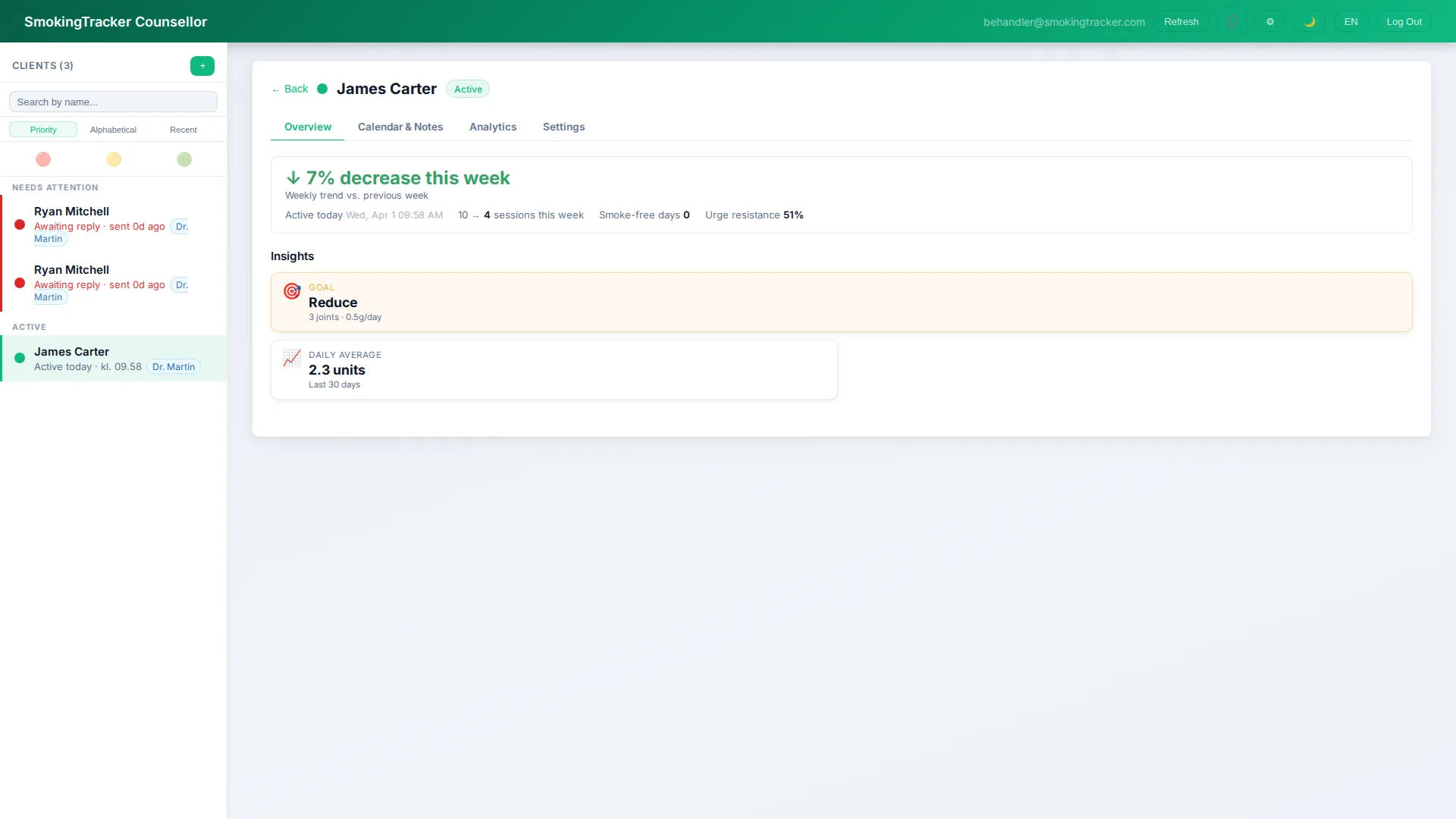
For supervised clinicians, SmokingTracker reports provide objective evidence of treatment progress that supplements session notes. For billing, the reports demonstrate ongoing clinical necessity using quantified outcome data — not subjective clinician judgement alone.

  • Objective outcome data for supervision case presentation
  • Quantified progress metrics — not just clinician impression
  • Supports ongoing medical necessity documentation
  • Formatted for non-clinical stakeholders — clear narrative + data
See privacy and compliance details →
Practitioner patient detail view with trend charts and clinical data
Clinical Evidence

Why documented outcomes matter in addiction treatment

Structured outcome documentation improves treatment quality, payer relations, and clinical accountability.

Clinical Accountability

Clinicians who track outcomes adjust treatment plans more frequently — improving results

Research in feedback-informed treatment shows that when clinicians have access to quantified outcome data, they adapt their approach more responsively than those relying on clinical impression alone.

Treatment Necessity

Objective outcome measures are the gold standard for demonstrating ongoing treatment necessity

Insurance and funding bodies increasingly require quantified evidence of ongoing clinical need. EMA-derived data provides a defensible, reproducible basis that session notes alone cannot.

Data Quality

EMA data shows 3× higher ecological validity than end-of-week recall assessments

Momentary capture eliminates the reconstruction errors that distort retrospective self-report — making EMA-derived reports a more accurate clinical record than questionnaire-based alternatives.

Client Engagement

Clients who review their own progress data show significantly higher treatment engagement

Sharing report content with clients as part of the therapeutic conversation increases insight, accountability, and motivation — an argument for using reports collaboratively, not just administratively.

Selected references:

  1. Shimokawa K et al. (2010). Enhancing treatment outcome of patients at risk of treatment failure. J Consult Clin Psychol.
  2. Shiffman S (2009). Ecological momentary assessment in tobacco and alcohol research. Nicotine Tob Res.
  3. Lambert MJ & Shimokawa K (2011). Collecting client feedback. Psychotherapy.
How It Works

From data to document in three steps

1

Data collects automatically

Every session your client logs contributes to the report dataset in real time. Mood, triggers, method, amount — all timestamped and stored securely.

2

Add your clinical notes

Annotate the data from the practitioner dashboard — flag events, add session notes, mark goal achievements. Your annotations will appear in context in the report.

3

Export as formatted PDF

Select the client, choose the date range, and click Export. The report is generated instantly — charts, notes, and all — ready for EHR entry, referral, or supervision.

Related Features

Get full reporting access during the free pilot

No setup fee. No automatic charges. Full reporting access for your entire caseload.

Want to see it in action?

Request access and see how SmokingTracker can support your treatment center during the current free pilot.

Start Free See Pricing
Currently free until October 2026 · No setup fee · No automatic charges